A New Life For An Old Amplifier

An audio amplifier was once a fairly simple analogue device, but in recent decades a typical home entertainment amplifier will have expanded to include many digital functions. When these break they are often proprietary and not easy to repair, as was the case with a broken Pioneer surround-sound device given to [Boz]. It sat on the shelf for a few years until he had the idea of a jukebox for his ripped CDs, and his returning it to life with a new main board is something to behold.

Internally it’s a surprisingly modular design, meaning that the front panel with its VFD display and driver were intact and working, as were the class AB amplifier and its power supply. He had the service manual so reverse engineering was straightforward, thus out came the main board in favor of a replacement. He took the original connectors and a few other components, then designed a PCB to take them and a Raspberry Pi Pico and DAC. With appropriate MMBASIC firmware it looks as though it was originally made this way, a sense heightened by a look at the motherboard inside (ignoring a couple of bodges).

We like seeing projects like this one which revive broken devices, and this one is particularly special quality wise. We’re more used to seeing it with gaming hardware though.
Bose SoundTouch Smart Speakers Get An Open Source Lifeline

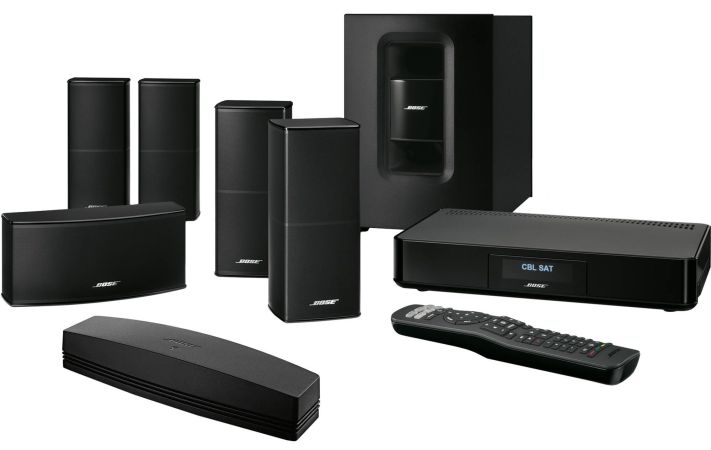
After initially announcing that Bose will completely turn off all ‘smart’ features in its SoundTouch series of speaker products, the company has seemingly responded to the wave of unhappy feedback with a compromise solution. Rather than the complete shutdown and cut-off that we reported on previously, Bose will now remove cloud support as its servers shut down, but the SoundTouch mobile app will get an update that gets truncated to just the local support functions. Bose also made the SoundTouch Web API documentation available as a PDF document.

The shutdown date has also been extended from the original February 18 to May 6th of this year. Although these changes mean that the mobile app can no longer use music services, features like grouping speakers and controlling playback will keep working. Features such as presets which were cloud-based will naturally stop working.

With the web API documentation made public it remains to be seen how helpful this will be. From a quick glance at the PDF documentation it appears to be a typical REST API, using HTTP on port 8090 on the SoundTouch device, with an SGML-style tag system to format messages. In so far as the community hasn’t already reverse-engineered this API it’s at least nice to have official documentation.

How Do PAL And NTSC Really Work?

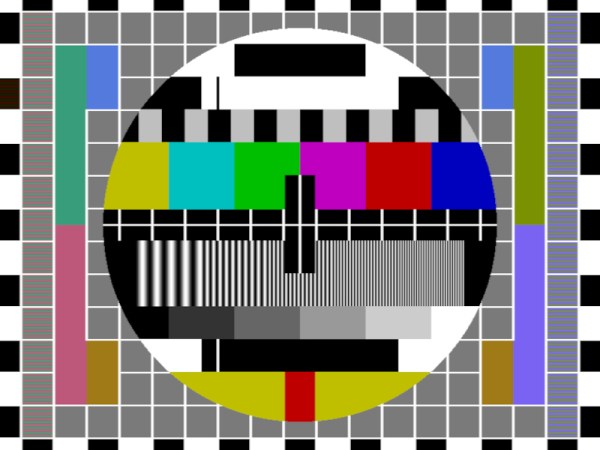
Many projects on these pages do clever things with video. Whether it’s digital or analogue, it’s certain our community can push a humble microcontroller to the limit of its capability. But sometimes the terminology is a little casually applied, and in particular with video there’s an obvious example. We say “PAL”, or “NTSC” to refer to any composite video signal, and perhaps it’s time to delve beyond that into the colour systems those letters convey.

Know Your Sub-carriers From Your Sync Pulses

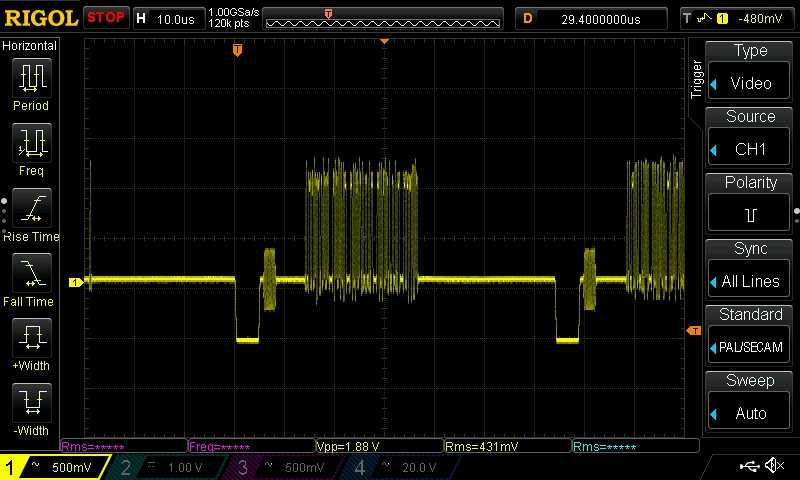
A close-up on a single line of composite video from a Raspberry Pi.

A video system of the type we’re used to is dot-sequential. It splits an image into pixels and transmits them sequentially, pixel by pixel and line by line. This is the same for an analogue video system as it is for many digital bitmap formats. In the case of a fully analogue TV system there is no individual pixel counting, instead the camera scans across each line in a continuous movement to generate an analogue waveform representing the intensity of light. If you add in a synchronisation pulse at the end of each line and another at the end of each frame you have a video signal.

But crucially it’s not a composite video signal, because it contains only luminance information. It’s a black-and-white image. The first broadcast TV systems as for example the British 405 line and American 525 line systems worked in exactly this way, with the addition of a separate carrier for their accompanying sound. Continue reading “How Do PAL And NTSC Really Work?”

Know Audio: Microphone Basics

A friend of mine is producing a series of HOWTO videos for an open source project, and discovered that he needed a better microphone than the one built into his laptop.  Upon searching, he was faced with a bewildering array of peripherals aimed at would-be podcasters, influencers, and content creators, many of which appeared to be well-packaged versions of very cheap genericised items such as you can find on AliExpress.

If an experienced electronic engineer finds himself baffled when buying a microphone, what chance does a less-informed member of the public have! It’s time to shed some light on the matter, and to move for the first time in this series from the playback into the recording half of the audio world. Let’s consider the microphone.

Background, History, and Principles

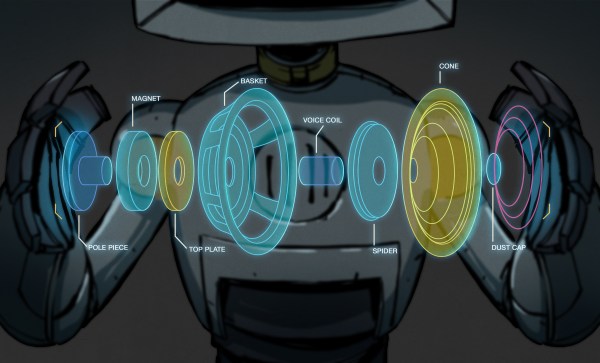
A microphone is simply a device for converting the pressure variations in the air created by sounds, into electrical impulses that can be recorded. They will always be accompanied by some kind of signal conditioning preamplifier, but in this instance we’re considering the physical microphone itself. There are a variety of different types of microphone in use, and after a short look at microphone history and a discussion of what makes a good microphone, we’ll consider a few of them in detail. Continue reading “Know Audio: Microphone Basics”

Know Audio: Lossy Compression Algorithms And Distortion

In previous episodes of this long-running series looking at the world of high-quality audio, at every point we’ve stayed in the real world of physical audio hardware. From the human ear to the loudspeaker, from the DAC to measuring distortion, this is all stuff that can happen on your bench or in your Hi-Fi rack.

We’re now going for the first time to diverge from the practical world of hardware into the theoretical world of mathematics, as we consider a very contentious topic in the world of audio. We live in a world in which it is now normal for audio to have some form of digital compression applied to it, some of which has an effect on what is played back through our speakers and headphones. When a compression algorithm changes what we hear, it’s distortion in audio terms, but how much is it distorted and how do we even measure that? It’s time to dive in and play with some audio files. Continue reading “Know Audio: Lossy Compression Algorithms And Distortion”

Analog Surround Sound Was Everywhere, But You Probably Didn’t Notice

These days, most of the media we consume is digital. We still watch movies and TV shows, but they’re all packaged in digital files that cram in many millions of pixels and as many audio channels as we could possibly desire.

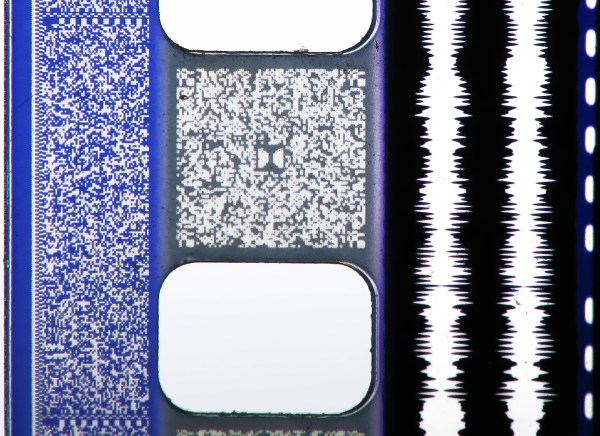
Back in the day, though, engineering limitations meant that media on film or tape were limited to analog stereo audio at best. And yet, the masterminds at Dolby were able to create a surround sound format that could operate within those very limitations, turning two channels in to four. What started out as a cinematic format would bring surround sound to the home—all the way back in 1982!

Continue reading “Analog Surround Sound Was Everywhere, But You Probably Didn’t Notice”

A Record Lathe For Analog Audio Perfection

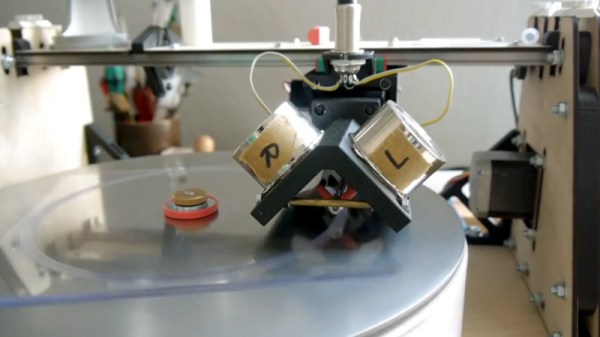
It’s no secret that here at Hackaday we’ve at times been tempted to poke fun at the world of audiophiles, a place where engineering sometimes takes second place to outright silliness. But when a high quality audio project comes along that brings some serious engineering to the table we’re all there for it, so when we saw [Slyka] had published the files for their open source record lathe, we knew it had to be time to bring it to you.

Truth be told we’ve been following this project for quite a while as they present tantalizing glimpses of it on social media, so while as they observe, documentation is hard, it should still be enough for anyone willing to try cutting their own recordings to get started. There’s the lathe itself, the controller, the software, and a tool for mapping EQ curves. It cuts in polycarbonate, though sadly there doesn’t seem to be a sound sample online for us to judge.

If you’re hungry for more this certainly isn’t the first record lathe we’ve brought you, and meanwhile we’ve gone a little deeper into the mystique surrounding vinyl.

Continue reading “A Record Lathe For Analog Audio Perfection”